
Understanding Rahu and Ketu in Vedic Astrology
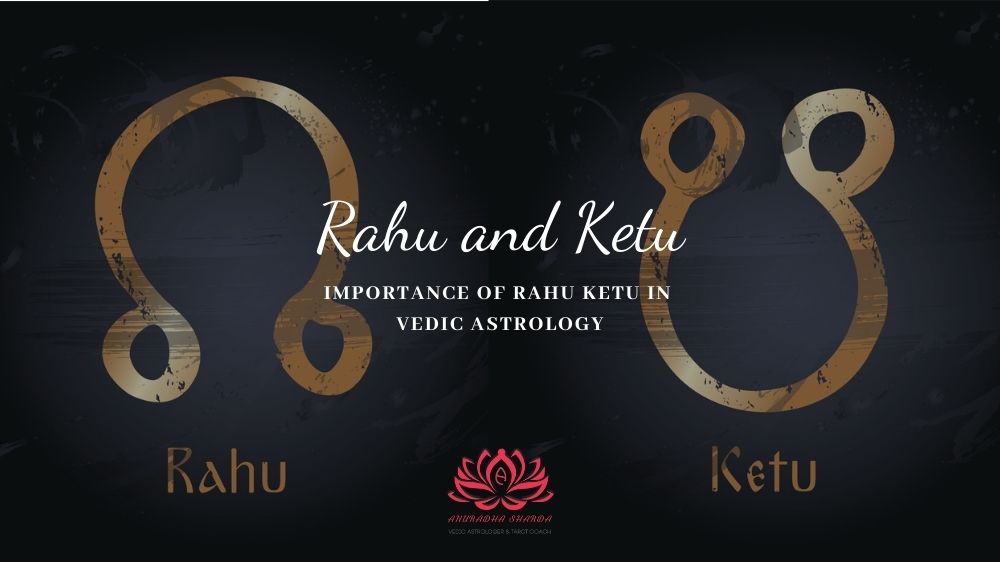
Rahu and Ketu hold a unique position in Vedic astrology. Unlike the Sun, Moon, and other planets, they are not physical planets. They are known as the lunar nodes and are considered important points in the birth chart. In traditional Vedic astrology, Rahu and Ketu are associated with life experiences, desires, transformation, uncertainty, spirituality, and detachment.
Understanding their placement in a Kundli can provide a traditional perspective on different areas of life, including career, relationships, finances, education, and personal development.
What Are Rahu and Ketu?
Rahu and Ketu are the two lunar nodes created by the intersection of the Moon's orbit with the apparent path of the Sun. Rahu is known as the North Node, while Ketu is known as the South Node.
In Vedic astrology, they are considered shadow planets because they do not have a physical form like the visible planets. Their influence is interpreted primarily through their placement in different houses and zodiac signs, conjunctions, aspects, and planetary periods.
Rahu and Ketu always appear opposite each other in a Kundli. Therefore, when Rahu occupies one house, Ketu will be positioned exactly opposite it.
Significance of Rahu in Vedic Astrology
Rahu is traditionally associated with ambition, worldly desires, material interests, innovation, unconventional experiences, and the desire to explore unfamiliar areas.
Its influence may encourage a person to seek new experiences and pursue goals outside conventional paths. Rahu is often associated with technology, foreign connections, modern industries, media, and unusual career directions.
However, Rahu's influence can vary considerably depending on its house placement, zodiac sign, planetary associations, and the overall structure of the birth chart.
Significance of Ketu in Vedic Astrology
Ketu is traditionally associated with detachment, spirituality, introspection, intuition, research, and a desire to move away from excessive attachment to material matters.
Its influence may encourage individuals to explore deeper subjects and develop interest in spirituality, meditation, research, or self-understanding.
Like Rahu, Ketu should not be interpreted independently. Its placement, ruling planet, aspects, conjunctions, and planetary periods are considered when analyzing its potential influence.
Rahu and Ketu Across the 12 Houses
The house placement of Rahu and Ketu is an important part of traditional Kundli analysis.
For example, Rahu in the 10th house may be examined in relation to career ambitions, professional recognition, and unconventional career paths, while Ketu in the 4th house may be considered in relation to home, emotional attachment, and inner peace.
Similarly, Rahu in the 7th house and Ketu in the 1st house may be studied when discussing relationships, partnerships, and individuality.
The interpretation changes depending on the complete birth chart, so the same placement does not necessarily produce identical experiences for everyone.
Rahu and Ketu in Career
Career-related concerns are among the most common reasons individuals explore Vedic astrology. Rahu is often associated with ambition and unconventional professional opportunities. Its influence may be observed in careers connected with technology, digital platforms, foreign companies, research, media, and emerging industries.
Ketu, on the other hand, may encourage a more independent or specialized approach to work. Traditional interpretations often associate Ketu with research, technical subjects, spirituality, analysis, and professions requiring deep concentration.
Career analysis should also include the 10th house, its ruling planet, the 6th and 11th houses, relevant planetary periods, and other planetary influences.
Rahu and Ketu in Relationships
Rahu and Ketu can also be considered when studying relationships and marriage. Their placement in the 1st and 7th houses may receive particular attention during relationship analysis.
Rahu may traditionally represent strong attraction, unusual relationship experiences, or relationships involving different backgrounds. Ketu may be associated with detachment or a need for personal space.
However, marriage analysis requires examination of several factors, including the 7th house, its ruling planet, Venus, Jupiter, Navamsa, and relevant planetary periods.
Rahu, Ketu and Spiritual Growth
One of the most distinctive aspects of Rahu and Ketu is their connection with both material experiences and spiritual development.
Rahu is often associated with the desire to experience and explore the material world, while Ketu is traditionally connected with detachment, wisdom, and inner exploration.
From a Vedic astrology perspective, their axis can be viewed as representing a balance between areas where a person seeks new experiences and areas where they already possess familiarity or seek greater detachment.
Planetary Periods of Rahu and Ketu
Vedic astrology gives significant importance to Mahadasha and Antardasha systems. Rahu and Ketu can have their own planetary periods, during which their influence is traditionally considered stronger.
The experiences associated with these periods depend on their placement in the birth chart and their relationship with other planets.
Rather than assuming that a Rahu or Ketu period will always be positive or negative, astrologers generally examine the complete horoscope before interpreting its significance.
Traditional Remedies for Rahu and Ketu
Vedic astrology includes several traditional remedies associated with Rahu and Ketu. Depending on an individual's birth chart and astrological tradition, these may include prayers, meditation, charitable acts, mantra chanting, and other spiritual practices.
Remedies should be approached thoughtfully and should complement practical decision-making rather than replace professional advice in financial, medical, legal, or personal matters.
Why Consult an Experienced Astrologer?
Understanding the influence of Rahu and Ketu requires a detailed examination of the complete birth chart. Their effects cannot be judged solely by sign or house placement.
An experienced astrologer can analyze planetary positions, Dashas, aspects, and overall chart dynamics to provide meaningful insight into career, marriage, finances, education, and spiritual growth.
Conclusion
Rahu and Ketu are important elements of Vedic astrology and are traditionally associated with ambition, change, detachment, spirituality, unconventional experiences, and personal transformation.
Because Rahu and Ketu can produce different interpretations depending on the complete Kundli, they should not be judged solely by their individual placement. A detailed horoscope analysis can provide a broader understanding of their significance in different areas of life.
If you are interested in understanding the influence of Rahu and Ketu in your personal birth chart, consulting theTop Astrologer in Bangalore can help you gain personalized Vedic astrology guidance based on a complete Kundli analysis.